
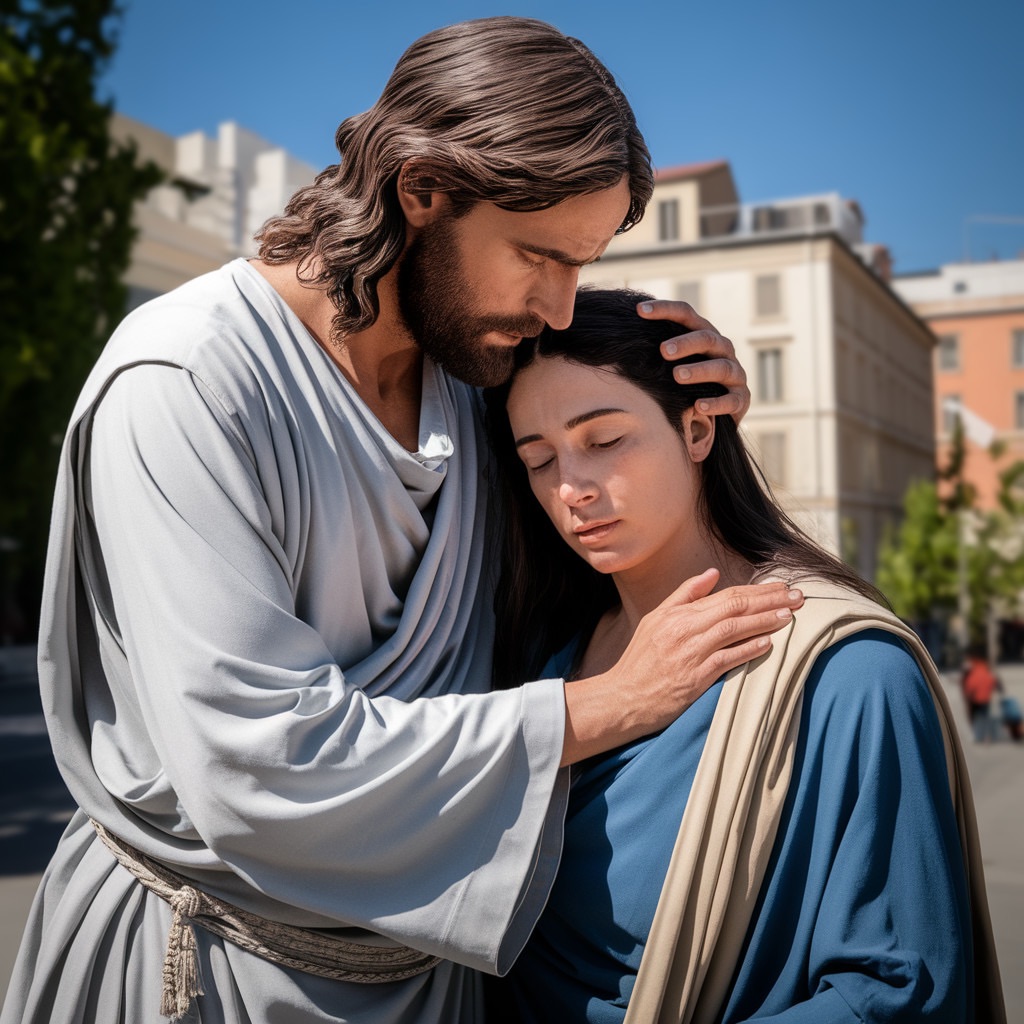
Healing is a profound and multifaceted process that touches the physical, emotional, and spiritual dimensions of human existence. In the realm of mental health, healing often centers on recovering from trauma, a deeply distressing experience that can leave lasting psychological wounds. The power of suggestion—the influence of belief and expectation on outcomes—emerges as a compelling factor in this process, bridging the mind’s potential with tangible recovery. This essay explores these themes through a psychological and spiritual lens, culminating in an analysis of the biblical story of Christ healing the bleeding woman, a narrative that vividly illustrates the interplay of faith and healing. By weaving together these elements, we aim to understand how belief, mindset, and divine intervention can contribute to wholeness, particularly within the context of mental health and trauma.
Understanding Healing
Healing is the restoration of health and well-being, a concept that transcends mere physical repair to encompass emotional and spiritual renewal. Physically, healing involves the body’s natural mechanisms—such as tissue regeneration—or medical interventions like surgery and medication. Emotionally, it addresses wounds like grief, fear, or shame, often requiring introspection and support to mend. Spiritually, healing restores a sense of purpose, connection, or peace, frequently nurtured through practices like prayer or meditation.
These dimensions are deeply interconnected. For instance, chronic physical illness can erode emotional resilience, while unresolved emotional pain might manifest as physical symptoms like fatigue or tension. The biopsychosocial model, widely used in modern medicine, recognizes this interplay, positing that biological, psychological, and social factors all shape health and healing. In many cultures, healing is viewed holistically: traditional practices like acupuncture or Ayurveda aim to balance body and mind, while community rituals reinforce social bonds as a healing force.
In the context of mental health and trauma, healing focuses on emotional and psychological restoration. Trauma disrupts one’s sense of safety and identity, necessitating a process that not only repairs but also rebuilds. Yet, as we will see in the story of the bleeding woman, physical healing can carry emotional and spiritual significance, suggesting that belief and mindset play pivotal roles across all domains.
Mental Health and Trauma
Mental health encompasses our emotional, psychological, and social well-being, influencing how we think, feel, and navigate life’s challenges. Trauma, defined as a response to events that overwhelm one’s ability to cope—such as abuse, violence, or loss—can profoundly disrupt this balance. According to the American Psychological Association, trauma affects millions globally, with an estimated 70% of adults experiencing at least one traumatic event in their lifetime.
Trauma’s impact is both immediate and enduring. Neurologically, it can heighten activity in the amygdala (the brain’s fear center) while impairing the prefrontal cortex (responsible for reasoning), leading to symptoms like hypervigilance or emotional numbness. Psychologically, it may result in conditions such as post-traumatic stress disorder (PTSD), anxiety, or depression. For example, PTSD, affecting about 6% of the U.S. population annually, is characterized by intrusive memories, avoidance, and heightened arousal—symptoms that echo trauma’s lingering echo.
Healing from trauma is a complex journey. Evidence-based therapies like cognitive-behavioral therapy (CBT) help reframe negative thoughts, while eye movement desensitization and reprocessing (EMDR) facilitates the processing of traumatic memories. Somatic experiencing, another approach, addresses trauma stored in the body, emphasizing physical sensations to release pent-up stress. Beyond clinical interventions, social support—friends, family, or community—plays a vital role, offering validation and a sense of belonging.
Yet, healing is not linear. Trauma can shatter trust and hope, making it difficult to engage with treatment or relationships. Trauma-informed care, an approach gaining traction, emphasizes safety, empowerment, and sensitivity to avoid re-traumatization. For marginalized groups, access to such care remains a challenge, underscoring the need for culturally responsive strategies. Amid these complexities, the role of belief and suggestion emerges as a potential ally in recovery.
The Power of Suggestion
The power of suggestion refers to the phenomenon where beliefs, expectations, or external cues influence an individual’s perceptions, behaviors, or physiological states. Rooted in psychology, it highlights the mind’s capacity to shape reality. The placebo effect is its most celebrated manifestation: patients receiving inert treatments, like sugar pills, often experience real improvements—pain relief, reduced inflammation, or better mood—simply because they believe the treatment works.
Research underscores this potency. A 2010 study in The Lancet found that placebos could alleviate symptoms in conditions like irritable bowel syndrome, with effects linked to expectation-induced releases of endorphins or dopamine. Conversely, the nocebo effect demonstrates suggestion’s darker side: negative expectations, such as anticipating side effects, can worsen outcomes, even with harmless interventions.
Suggestion extends beyond medicine. In education, students praised for their potential often outperform peers, a self-fulfilling prophecy rooted in belief. In therapy, techniques like hypnosis leverage suggestion to reduce anxiety or alter habits, guiding patients into receptive states where positive ideas take root. Cognitive-behavioral therapy, too, uses suggestion implicitly, encouraging patients to adopt healthier thought patterns.
The mechanisms are multifaceted. Conditioning—associating a stimulus with an outcome—can prime responses, while expectation shapes perception, as seen in placebo studies where brain imaging reveals altered neural activity. This suggests that belief can trigger measurable changes, bridging mind and body. Ethically, this raises questions: should suggestion be harnessed more deliberately in healing, or does it risk oversimplifying complex conditions?
In mental health, suggestion offers a tool for resilience. Positive affirmations or visualization—imagining a safe, healed state—can bolster hope, a critical factor in trauma recovery. However, its limits are clear: suggestion cannot erase trauma or cure severe illness alone. Instead, it complements other efforts, amplifying their impact through the power of the mind.
The Story of the Bleeding Woman
In the gospels of Matthew (9:20-22), Mark (5:25-34), and Luke (8:43-48), a woman afflicted with a bleeding disorder for 12 years seeks healing from Jesus. Having exhausted her resources on physicians to no avail, she hears of Jesus’ miracles and believes that touching his cloak will heal her. Amid a pressing crowd, she reaches out, and instantly, her bleeding ceases. Jesus, sensing power leaving him, asks, “Who touched me?” Trembling, the woman confesses, and he responds, “Daughter, your faith has healed you. Go in peace.”
This narrative is rich with meaning. In first-century Jewish culture, her condition rendered her ritually unclean (Leviticus 15:25-27), isolating her socially and spiritually. Her act—touching Jesus in a crowd—was bold, defying norms to pursue healing. Her faith, not mere superstition, drove her: she didn’t seek a magical cure but trusted in Jesus’ divine authority.
The story emphasizes faith’s role. Jesus attributes her healing to her belief, suggesting that her expectation activated a transformative power. Physically, her recovery is miraculous, defying medical explanation. Yet, the emotional and spiritual dimensions are equally striking: Jesus’ words—“Go in peace”—restore her dignity, ending years of shame and exclusion.
Theological interpretations vary. Some see it as evidence of divine power, others as a testament to human faith’s potential when aligned with God. Feminist readings highlight her agency, a woman taking initiative in a patriarchal world. Compared to other gospel healings—like the blind man (John 9) or the paralytic (Mark 2)—it uniquely ties healing to the sufferer’s belief, not just Jesus’ action.
For this essay, the story serves as a bridge between physical healing and the psychological themes of mental health and suggestion, inviting us to explore how faith might parallel modern understandings of belief’s influence.
Connecting the Concepts
The bleeding woman’s healing offers a lens to connect healing, mental health, trauma, and the power of suggestion. Her story begins with trauma—not just physical suffering but the emotional toll of isolation and despair. Her faith mirrors the psychological concept of self-efficacy, Albert Bandura’s theory that belief in one’s ability to succeed fosters action and resilience. By reaching for Jesus’ cloak, she enacted this belief, and her healing followed.
In mental health, self-efficacy is vital. Trauma often erodes confidence, leaving individuals feeling powerless. Therapies like CBT aim to restore it, reframing thoughts to empower action—much like the woman’s conviction propelled her forward. The placebo effect aligns here, too: her expectation of healing, akin to a placebo recipient’s trust in a pill, may have primed her body for recovery, amplifying divine intervention.
Suggestion’s role in trauma recovery is practical. Visualization, where patients imagine safety or strength, echoes the woman’s focus on Jesus as her healing source. Affirmations—“I am capable of healing”—parallel her inner resolve. Studies show such techniques reduce stress hormones, suggesting a biological basis for belief’s impact.
Yet, parallels have limits. The woman’s healing was instantaneous and supernatural, unlike the gradual process of trauma recovery. Her faith didn’t replace action—she sought Jesus actively, just as therapy requires engagement. Nor does her story imply healing hinges solely on belief: many with faith face persistent struggles, and modern care integrates medication, therapy, and support.
Faith, broadly defined, bridges these realms. Religious faith, like hers, offers hope and meaning, as seen in studies linking spirituality to better mental health outcomes. Secular faith—in oneself, community, or recovery—similarly sustains effort. Socially, her healing occurred in relationship with Jesus, underscoring connection’s role, a parallel to the therapeutic alliance or community support in trauma care.
Thus, the power of suggestion, exemplified by her faith and placebo effects, enhances healing when paired with action and support. It’s not a cure-all but a catalyst, amplifying resilience across physical and psychological domains.
Conclusion
Healing is a tapestry woven from physical, emotional, and spiritual threads, with mental health and trauma recovery at its heart. The power of suggestion—whether through faith, expectation, or therapeutic tools—emerges as a thread that strengthens this fabric. The bleeding woman’s story illustrates this vividly: her belief, acted upon, led to wholeness, echoing modern insights into how mindset shapes outcomes.
For mental health, this suggests a holistic approach. Professional care—therapy, medication—lays the foundation, while belief and suggestion build upon it, fostering hope and agency. Trauma’s wounds are deep, but cultivating a positive outlook, as the woman did, can lighten the burden, complementing clinical efforts.
Her narrative also invites reflection. Healing isn’t guaranteed by faith alone, nor should suffering be blamed on its absence. Instead, it highlights potential: belief, whether in God, oneself, or a better future, can ignite change. In practice, this might mean embracing small steps—seeking help, practicing gratitude—while holding space for hope.
In a world where trauma and mental health challenges abound, the interplay of healing and suggestion offers a beacon. By integrating mind, body, and spirit, as the bleeding woman’s story suggests, we can pursue wholeness with courage and grace, trusting in the transformative power within and beyond us.

Daniel B Guimaraes MD MSc, Editor
 Bizarre Times
Leave a comment