

The question of whether consciousness—the state of awareness, thought, and perception—persists after physical death has captivated humanity across cultures and centuries. While science attributes consciousness to brain activity, various phenomena challenge this view, suggesting that awareness might transcend the body. This essay examines five pieces of evidence often cited in support of this idea: Near-Death Experiences (NDEs), Reincarnation, Mediumship and Spirit Communication, Out-of-Body Experiences (OBEs), and Quantum Physics theories of consciousness. Each is explored with examples, arguments for and against, and an assessment of its strength, revealing a complex interplay of belief, experience, and skepticism.
- Near-Death Experiences (NDEs)
Near-Death Experiences occur when individuals facing clinical death or severe trauma report profound sensations, such as peace, a tunnel of light, or seeing their bodies from above. These accounts suggest consciousness may function independently of a living brain.
A notable case is Pam Reynolds, who underwent brain surgery in 1991 with her body cooled and brain activity halted. She later described observing the operating room, accurately recalling surgical tools and staff conversations—details she shouldn’t have perceived. Thousands of similar NDE reports worldwide share consistent themes, like meeting deceased relatives or experiencing a life review, hinting at a universal phenomenon.
Proponents argue that NDEs provide evidence of consciousness surviving death because some patients report verifiable perceptions during periods of no brain activity. The consistency across cultures and the transformative impact on survivors—often leading to reduced fear of death—bolster this view.
Skeptics attribute NDEs to physiological processes: oxygen deprivation may cause tunnel vision, endorphin surges could explain euphoria, and brain stress might produce hallucinations. Reynolds’ case, while striking, could involve residual awareness or memory reconstruction. NDEs are subjective and unrepeatable in labs, weakening their scientific weight.
NDEs are compelling and widely reported, but their reliance on personal testimony and plausible biological explanations limits their conclusiveness. They suggest possibilities but don’t definitively prove consciousness survives death.
- Reincarnation
Reincarnation posits that consciousness transfers to a new body after death, with some individuals recalling past lives as evidence.
Dr. Ian Stevenson documented over 2,500 cases of children claiming past-life memories, often with verifiable details. For instance, a boy in India recalled being a man killed by a gunshot, naming his village and family; investigators confirmed the details matched a deceased person’s life. Some children also display birthmarks aligning with fatal wounds from their alleged past lives.
The specificity and accuracy of these memories, especially in young children unlikely to fabricate complex stories, suggest consciousness may persist and reincarnate. Physical marks correlating with past injuries add intrigue.
Critics propose cryptomnesia—unconscious recall of overheard information—or cultural suggestion in reincarnation-friendly societies. Coincidence or parental influence could explain apparent matches. Lacking controlled experiments, the evidence remains anecdotal.
Reincarnation cases are fascinating and detailed, but their interpretive nature and cultural bias prevent them from being scientific proof. They inspire wonder but fall short of certainty.
- Mediumship and Spirit Communication
Mediums claim to connect with deceased spirits, offering messages as evidence of postmortem consciousness.
In the 19th century, the Fox sisters gained fame for alleged spirit communications via raps, influencing spiritualism. Modern mediums, tested by researchers, occasionally provide accurate details about the deceased unknown to them or their clients, as seen in some controlled studies by the Windbridge Research Center.
When mediums relay specific, previously unknown information, it suggests contact with a surviving consciousness. Historical consistency and occasional rigor in testing lend credence.
Many mediums use cold reading—vague guesses refined by responses—or hot reading—prior research. Fraud has tainted the field, and even genuine cases might reflect intuition or luck. Scientific validation is inconsistent.
Mediumship offers tantalizing anecdotes, but pervasive skepticism and alternative explanations undermine its reliability. It’s suggestive but not conclusive.
- Out-of-Body Experiences (OBEs)
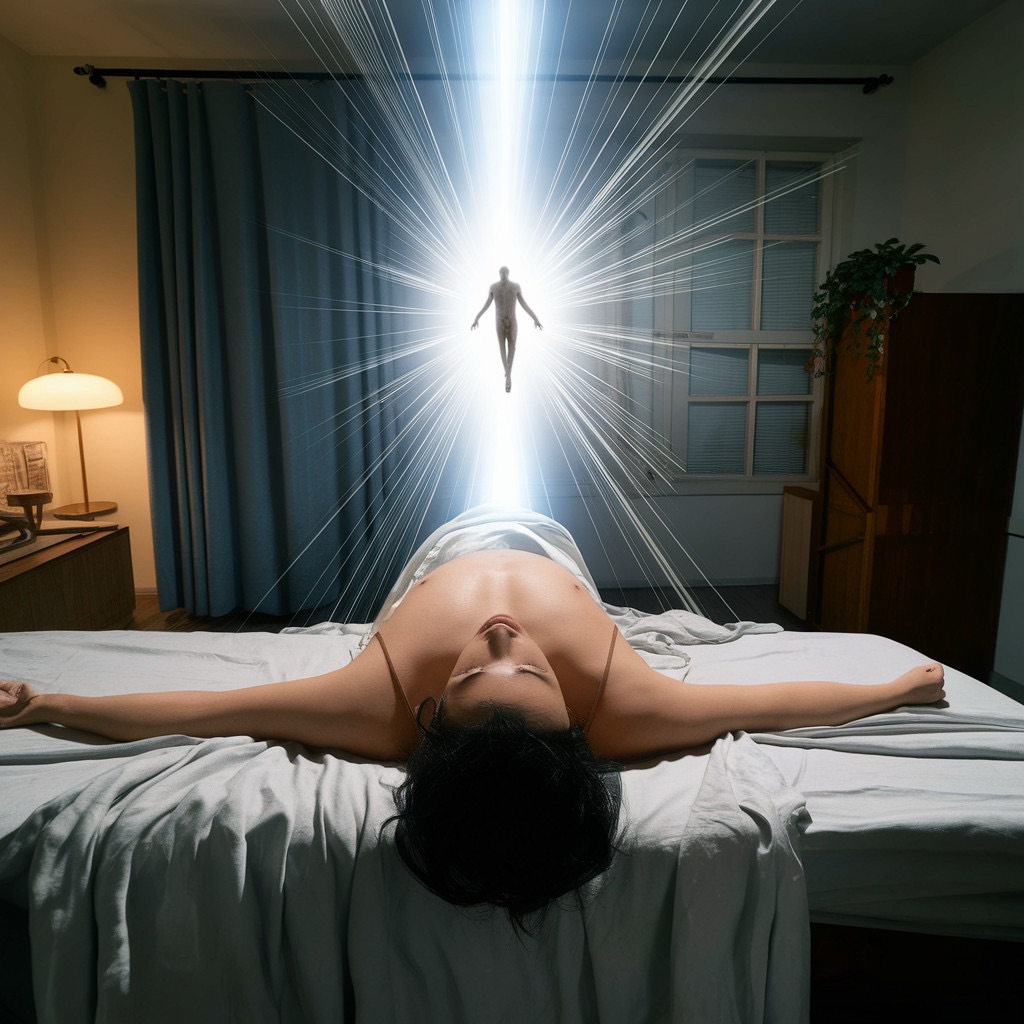
OBEs involve feeling detached from one’s body, often observing it from outside, implying consciousness can separate from physical form.
Robert Monroe popularized OBEs through personal accounts of “traveling” beyond his body. Some studies, like those by Dr. Charles Tart, report subjects describing distant objects during OBEs, such as hidden signs in hospital rooms, hinting at external awareness.
Accurate perceptions during OBEs, especially when verified, suggest consciousness isn’t confined to the brain. Widespread reports across contexts reinforce the phenomenon’s significance.
OBEs can be induced by drugs, sensory deprivation, or brain stimulation (e.g., the temporoparietal junction), indicating a neurological basis. Verifiable details might stem from chance or unconscious cues. No study conclusively proves separation.
OBEs are intriguing and experiential, but their reproducibility under artificial conditions suggests brain-driven origins. They don’t firmly establish consciousness survival.
- Quantum Physics and Consciousness
Some quantum theories propose consciousness is fundamental to reality, potentially persisting beyond physical death.
The observer effect in quantum mechanics implies consciousness influences particle behavior. The Orchestrated Objective Reduction (Orch-OR) theory by Roger Penrose and Stuart Hameroff suggests consciousness arises from quantum processes in brain microtubules, hinting at a non-material essence.
If consciousness is quantum-based, it might exist independently of the brain, surviving death in a universal field. These ideas align with philosophical notions of a pervasive mind.
These theories are speculative, with no empirical evidence linking quantum events to consciousness. Mainstream science views consciousness as a classical neural process. The leap to survival is unproven.
Quantum theories are intellectually provocative but lack experimental support. They remain hypothetical, not evidential.
Conclusion
The five pieces of evidence—NDEs, reincarnation, mediumship, OBEs, and quantum theories—each offer unique perspectives on consciousness surviving physical death. NDEs and OBEs provide vivid personal accounts, reincarnation suggests continuity through memory, mediumship hints at communication, and quantum ideas propose a cosmic framework. Yet, all face substantial critiques: biological alternatives explain NDEs and OBEs, cultural influences and fraud weaken reincarnation and mediumship, and quantum theories lack substantiation. Collectively, they captivate the imagination and fuel debate, but their anecdotal, subjective, or theoretical nature prevents scientific consensus. Future advances in neuroscience or physics might clarify these mysteries, but for now, the survival of consciousness remains an open, enigmatic question.
Daniel B Guimaraes, MD MSc, Editor
 Bizarre Times
Leave a comment