

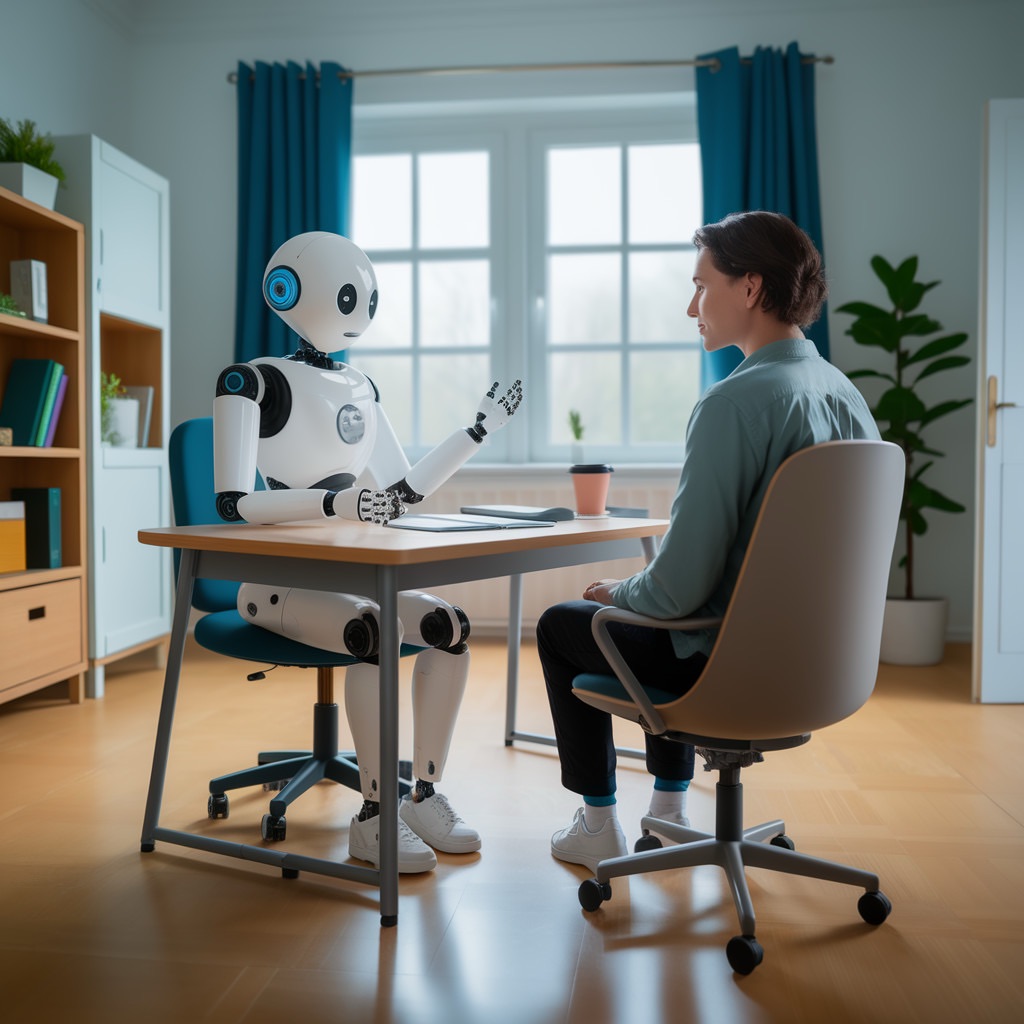
One significant application of artificial intelligence (AI) in psychopathology is the use of AI-powered chatbots to provide mental health support and therapy. Psychopathology, the scientific study of mental disorders, has traditionally depended on human clinicians to diagnose and treat conditions such as anxiety, depression, and schizophrenia. With the advent of AI, innovative tools like chatbots are transforming how mental health care is delivered, offering new avenues for support that complement traditional methods.
How AI Chatbots Work in Mental Health
AI chatbots are computer programs designed to simulate human conversation through text or voice interactions. In the realm of mental health, these chatbots are programmed to engage users in therapeutic dialogues, often drawing from evidence-based therapeutic frameworks such as cognitive-behavioral therapy (CBT). For instance, a chatbot might ask a user about their feelings, guide them through exercises to reframe negative thoughts, suggest coping strategies for stress, or simply provide a supportive, non-judgmental space to express emotions. These interactions are powered by natural language processing (NLP) and machine learning, enabling the chatbot to understand and respond to a wide range of user inputs.
Benefits of AI Chatbots
One of the standout advantages of AI chatbots is their ability to provide mental health support anytime and anywhere. Traditional therapy often faces barriers such as high costs, long wait times, limited availability of professionals, and social stigma. AI chatbots, accessible via smartphones or computers, break down these barriers by offering 24/7 support. This is particularly beneficial for individuals in rural or underserved areas where mental health resources are scarce, as well as for those who prefer anonymity over face-to-face sessions.
Unlike human therapists, who are constrained by time and the number of clients they can see, AI chatbots can interact with thousands of users simultaneously. This scalability makes them a powerful tool for disseminating mental health resources on a large scale, potentially reaching millions of people who might otherwise go without support. This capability is especially critical during public health crises, such as pandemics, when demand for mental health services often surges.
A Real-World Example: Woebot
A prominent example of this technology is Woebot, an AI chatbot designed to deliver CBT-based support for individuals experiencing anxiety and depression. Woebot engages users in daily check-ins, tracks their mood, and provides tailored psychoeducational content and exercises. Clinical studies have demonstrated its efficacy, with users reporting measurable reductions in symptoms of depression and anxiety after regular use. This evidence underscores the potential of AI chatbots as a legitimate component of mental health care.
Limitations and Ethical Considerations
Despite their promise, AI chatbots have limitations that must be acknowledged. While they can simulate conversation effectively, they lack the depth of empathy, intuition, and contextual understanding that human therapists bring to sessions. For example, they may struggle to interpret complex emotional nuances or cultural differences, which could lead to responses that feel generic or inadequate. Additionally, ethical concerns arise around data privacy. Users share highly sensitive information with these platforms, raising questions about how that data is stored, protected, and used. There’s also the risk of over-reliance, where individuals might forego human care in favor of a chatbot, potentially delaying necessary professional intervention.
The Future of AI Chatbots in Psychopathology
Looking ahead, advancements in AI technology could address some of these shortcomings. Improvements in NLP and machine learning may enable chatbots to better understand individual needs, adapt to diverse cultural contexts, and provide more personalized interventions. Integration with other technologies, such as wearable devices that monitor heart rate or sleep patterns, could enhance their ability to tailor support based on real-time physiological data. As these tools evolve, they could become even more effective complements to human-led therapy.
Conclusion
In summary, AI-powered chatbots represent a transformative application of AI in psychopathology, offering accessible, scalable, and immediate mental health support. While they cannot fully replace the human connection central to traditional therapy, their ability to reach underserved populations and augment existing services makes them a valuable addition to the mental health landscape. As technology progresses, their role in supporting mental well-being is likely to grow, provided ethical and practical challenges are carefully managed.
AI is being applied in psychopathology through chatbots that offer mental health support. Tools like Woebot use cognitive-behavioral therapy techniques to help users manage anxiety and depression. They’re accessible 24/7 and can assist many people at once, making them ideal for those without traditional therapy options. However, they lack the full empathy of human therapists and raise privacy concerns. Still, they’re a promising way to supplement mental health care.
Daniel B. Guimaraes, MD MSc, Editor
 Bizarre Times
Leave a comment